

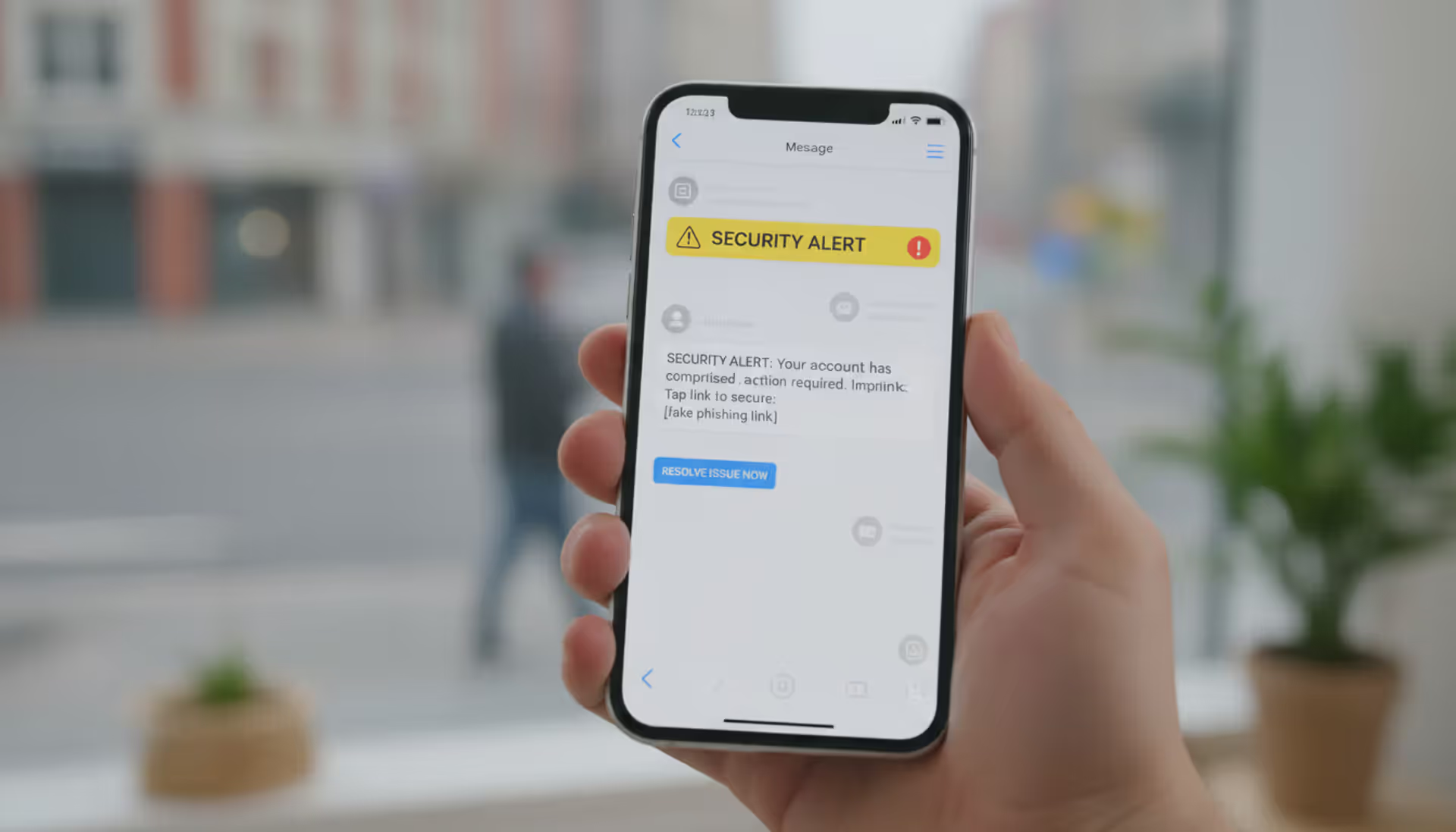
Cybercrime investigation workspace with phishing email analysis and legal enforcement theme
Is Phishing Illegal in the United States?

Content
Content
Yes, phishing is illegal in the United States. Both federal and state laws classify phishing as a serious crime that can result in prison time, substantial fines, and lasting civil penalties. Law enforcement agencies across the country actively investigate and prosecute phishing schemes, treating them as fraud offenses that harm individuals, businesses, and government institutions. Understanding phishing legality explained requires examining the specific statutes that criminalize these deceptive practices and the real-world consequences offenders face.
What Makes Phishing a Federal Crime
Phishing qualifies as a federal crime because it typically involves interstate communication, electronic fraud, and unauthorized access to computer systems—all activities that fall under federal jurisdiction. At its core, is phishing a crime? Absolutely. Federal prosecutors define phishing as using fraudulent electronic communications to deceive recipients into revealing sensitive information such as passwords, credit card numbers, Social Security numbers, or bank account credentials.
Several federal statutes directly address phishing activities. The Computer Fraud and Abuse Act (CFAA), codified at 18 U.S.C. § 1030, makes it illegal to access computers without authorization or to exceed authorized access. When someone creates a fake login page that mimics a legitimate website to steal credentials, they violate the CFAA by obtaining unauthorized access to protected systems using those stolen credentials.
Wire fraud laws under 18 U.S.C. § 1343 apply when phishing schemes use electronic communications—emails, text messages, or social media—to defraud victims. The statute criminalizes any scheme to defraud using interstate wire communications, which covers virtually all internet-based phishing attempts since they cross state lines.
The CAN-SPAM Act (15 U.S.C. § 7701 et seq.) establishes requirements for commercial email and prohibits deceptive header information and misleading subject lines. While primarily a civil statute, violations can lead to criminal prosecution when combined with other fraudulent activities. Phishing emails that falsely represent their origin or purpose violate this law.
Identity theft statutes (18 U.S.C. § 1028) come into play when phishers use stolen personal information to impersonate victims or commit further fraud. The moment a phisher uses someone's credentials to access their bank account or make unauthorized purchases, they've committed federal identity theft.
The legal framework treats phishing seriously because it undermines trust in digital communication, causes financial harm, and can facilitate larger criminal enterprises including money laundering, tax fraud, and organized cybercrime.
Author: Calvin Roderick;
Source: elegantimagerytv.com
Federal and State Laws That Prohibit Phishing
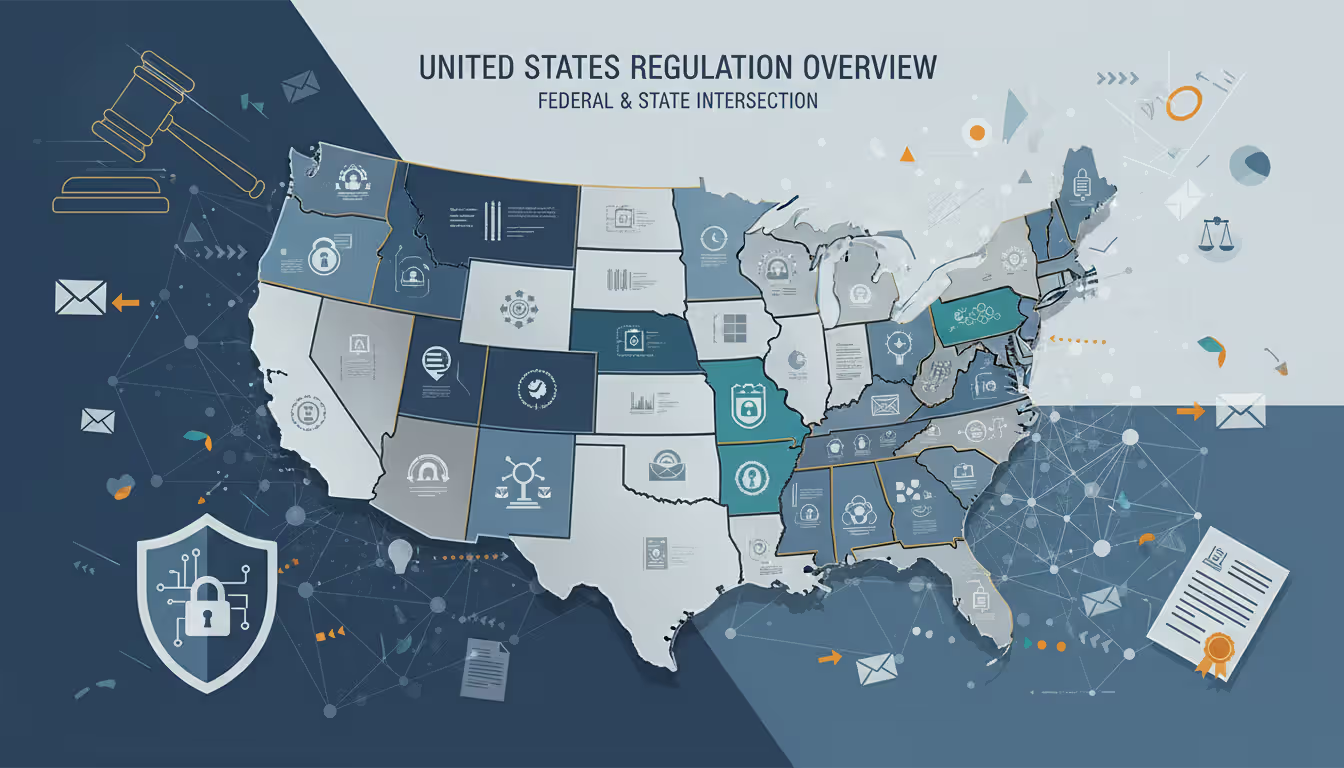
Phishing laws exist at both federal and state levels, creating multiple avenues for prosecution. Prosecutors often charge phishing offenders under several statutes simultaneously, reflecting the multifaceted nature of these crimes.
Key Federal Statutes
The Computer Fraud and Abuse Act remains the primary federal tool for prosecuting phishing. It covers accessing computers to obtain information, causing damage, or committing fraud. Maximum penalties reach up to 10 years for first offenses and 20 years for repeat offenders, depending on the specific subsection violated.
Wire fraud charges carry sentences up to 20 years per count, or 30 years if the fraud affects a financial institution. Federal prosecutors favor wire fraud charges because they're well-established, broadly applicable, and juries easily understand the concept of fraud via electronic communication.
The Aggravated Identity Theft statute (18 U.S.C. § 1028A) adds mandatory consecutive sentences of two years when identity theft occurs during certain felonies, including computer fraud and wire fraud. This means phishers who steal and use personal information face additional prison time on top of their underlying charges.
Bank fraud (18 U.S.C. § 1344) applies specifically when phishing targets financial institutions or their customers with intent to defraud the institution. This statute carries penalties up to 30 years imprisonment and fines up to $1 million.
The Electronic Communications Privacy Act and related statutes criminalize unauthorized interception of electronic communications, which can apply when phishers intercept emails or redirect communications through fraudulent servers.
State-Level Phishing Laws
Many states have enacted specific anti-phishing statutes that complement federal laws. California's phishing law (Penal Code § 502.5) explicitly criminalizes soliciting personal identifying information through email or websites by falsely representing the solicitor's identity. Violations constitute misdemeanors or felonies depending on the number of victims and amount of loss.
Virginia, Texas, New York, and at least 15 other states have similar statutes that specifically address phishing by name. These laws often provide for:
- Criminal penalties including imprisonment and fines
- Civil remedies allowing victims to sue phishers directly
- Provisions for injunctive relief to stop ongoing phishing campaigns
- Enhanced penalties when vulnerable populations (elderly, minors) are targeted
State prosecutors can pursue phishing cases independently of federal charges, particularly when victims and perpetrators reside in the same state. Some state laws provide for easier prosecution than federal statutes because they don't require proving interstate commerce or may have lower thresholds for damages.
The overlapping jurisdiction means a single phishing scheme can violate multiple federal and state laws simultaneously, exposing offenders to prosecution in various venues.
Author: Calvin Roderick;
Source: elegantimagerytv.com
Criminal Penalties for Phishing Offenses
Legal consequences of phishing vary dramatically based on the scope of the scheme, number of victims, total financial losses, and the defendant's criminal history. Phishing crime penalties range from probation for minor first-time offenses to decades in federal prison for sophisticated operations.
Federal sentencing guidelines calculate recommended sentences based on loss amount, number of victims, and specific offense characteristics. A phishing scheme causing $6,500 to $15,000 in losses adds 4 levels to the base offense level, while losses exceeding $3.5 million add 22 levels. Each increase substantially lengthens the recommended prison term.
Victim count matters significantly. Schemes affecting 10-50 victims add 2 levels; more than 250 victims add 6 levels. Sophisticated means—using complex technical methods or targeting vulnerable populations—add 2 levels. These enhancements stack, meaning a large-scale phishing operation quickly reaches sentence ranges of 10-15 years or more.
Maximum statutory penalties for common phishing charges include:
- Wire fraud: 20 years per count (30 years if affecting financial institutions)
- Computer fraud under CFAA: 5-20 years depending on circumstances
- Aggravated identity theft: mandatory 2 years consecutive
- Access device fraud: 10-15 years
- Bank fraud: 30 years
Fines reach $250,000 per count for individuals, or twice the gross gain or loss from the offense, whichever is greater. For organizational defendants, fines can reach $500,000 per count or twice the gain/loss.
Restitution is mandatory in fraud cases. Courts order defendants to pay back every dollar victims lost, regardless of the defendant's ability to pay. These orders remain enforceable for decades, garnishing wages and seizing assets long after prison release.
Misdemeanor phishing charges are rare at the federal level but can occur in state courts for small-scale attempts with no actual victims or minimal losses. These might result in probation, community service, and fines under $10,000.
Felony charges apply to virtually all successful phishing schemes and most attempts. The distinction between degrees of felonies depends on loss amounts, with thresholds varying by jurisdiction. Federal prosecutors typically won't pursue cases with losses under $5,000 unless they involve particularly vulnerable victims or are part of larger patterns.
Supervised release follows prison terms, typically lasting 3-5 years. During this period, offenders face restrictions on computer and internet use, employment limitations, and regular monitoring. Violations can result in returning to prison.
Author: Calvin Roderick;
Source: elegantimagerytv.com
Real-World Phishing Prosecutions and Sentences
Examining actual cases demonstrates how courts apply phishing laws and the severity of sentences imposed.
United States v. Afolabi (2023-2025): A Nigerian national orchestrated a business email compromise scheme targeting U.S. companies. He sent phishing emails impersonating executives, directing accounting departments to wire funds to fraudulent accounts. Over 18 months, the scheme netted $4.2 million from 37 companies. After extradition and trial, Afolabi received 12 years in federal prison, three years supervised release, and restitution of $4.2 million. The sentence reflected the sophisticated nature of the scheme, large number of victims, and international scope.
United States v. Chen (2024-2026): A California resident created fake Netflix and PayPal login pages, sending phishing emails to thousands of users claiming account problems requiring immediate login. He harvested 847 sets of credentials over six months, using some to make unauthorized purchases totaling $127,000. Chen pleaded guilty to wire fraud and aggravated identity theft, receiving 5 years imprisonment (including the mandatory 2-year consecutive term for identity theft), $127,000 restitution, and forfeiture of computers and cryptocurrency used in the scheme.
United States v. Martinez (2025): A first-time offender sent phishing texts impersonating a local credit union to 200 members, successfully obtaining credentials from 14 victims. Before he could monetize the stolen information, law enforcement arrested him. Despite no actual financial losses, Martinez was convicted of attempted wire fraud and unauthorized computer access. The court sentenced him to 18 months imprisonment followed by 3 years supervised release, reflecting the attempt's potential harm and the need for deterrence.
These cases illustrate that sentences vary based on actual harm, sophistication, defendant cooperation, and criminal history, but all resulted in prison time even for first offenses.
Civil Consequences Beyond Criminal Charges
Legal consequences of phishing extend well beyond criminal penalties. Victims can file civil lawsuits against phishers for damages, often recovering more than criminal restitution orders provide.
Civil claims typically include fraud, negligent misrepresentation, conversion (for stolen property), and violation of state consumer protection statutes. Some states allow treble damages for intentional fraud, meaning courts can award three times the actual damages. Attorney's fees and punitive damages can multiply liability further.
Companies victimized by phishing often pursue aggressive civil litigation. A business that lost $500,000 to a phishing scheme might obtain a civil judgment for $1.5 million in actual and punitive damages, plus legal fees. While collecting from defendants who've already been ordered to pay criminal restitution is challenging, judgments remain enforceable indefinitely and can attach to future assets and income.
Employment consequences are severe. Phishing convictions typically result in:
- Termination from current employment
- Inability to work in financial services, healthcare, education, or positions requiring security clearances
- Revocation of professional licenses (attorneys, accountants, healthcare providers)
- Barriers to employment requiring computer access or handling sensitive information
- Difficulty passing background checks for any position
Credit and financial impacts include:
- Difficulty obtaining loans, mortgages, or credit cards
- Seizure of assets to satisfy restitution and civil judgments
- Garnishment of wages for years or decades
- Potential bankruptcy, though criminal restitution is non-dischargeable
- Liens on property preventing sale or refinancing
Immigration consequences for non-citizens are particularly harsh. Phishing convictions constitute crimes of moral turpitude and aggravated felonies under immigration law, making defendants deportable and permanently inadmissible to the United States, even for lawful permanent residents.
Professional reputation damage is permanent in the internet age. Criminal records appear in background checks, news articles remain searchable indefinitely, and social media amplifies the information. Rebuilding trust and professional standing becomes extremely difficult.

Author: Calvin Roderick;
Source: elegantimagerytv.com
What to Do If You're Accused of Phishing
Being accused of phishing demands immediate action. Is phishing a crime that requires legal representation? Without question. The complexity of computer fraud laws and severity of legal consequences of phishing make professional legal counsel essential.
First, cease all communication with law enforcement without an attorney present. Federal agents and prosecutors are skilled at obtaining statements that seem innocuous but establish elements of crimes. Anything said can and will be used against you, even explanations intended to clarify misunderstandings.
Do not delete any data, destroy devices, or alter evidence. Obstruction of justice charges carry additional penalties and destroy any credibility with prosecutors or judges. Preserve everything in its current state and inform your attorney of all relevant materials.
Retain an experienced federal criminal defense attorney immediately, preferably one specializing in computer fraud cases. These cases involve technical complexities and specialized legal knowledge that general practitioners may lack. An attorney can:
- Negotiate with prosecutors before charges are filed
- Challenge the sufficiency of evidence and legality of searches
- Identify potential defenses and mitigating factors
- Advocate for reduced charges or alternative sentencing
- Prepare for trial if necessary
Potential defenses depend on the specific facts but may include:
- Lack of intent to defraud (mistaken identity, authorized access)
- Insufficient evidence linking defendant to the phishing activity
- Constitutional violations in evidence gathering (illegal searches, lack of warrant)
- Entrapment by law enforcement
- Mistake of fact regarding authorization or ownership
Cooperation with authorities can significantly reduce sentences. The federal sentencing guidelines provide substantial reductions for defendants who accept responsibility and provide substantial assistance. This might involve:
- Providing information about co-conspirators
- Testifying against others involved in larger schemes
- Assisting in recovering stolen funds or identifying victims
- Explaining technical aspects of the scheme to investigators
However, cooperation decisions require careful attorney guidance. Providing information without proper agreements in place offers no protection, and statements can incriminate the defendant in additional crimes.
Early intervention offers the best outcomes. Attorneys who engage prosecutors before indictment sometimes negotiate for lesser charges, pre-trial diversion programs, or declination of prosecution entirely, particularly for minor first-time offenses with minimal harm.
Federal prosecutors have made phishing investigations a top priority because these schemes have become increasingly sophisticated and cause billions in annual losses. We're seeing longer sentences and more aggressive prosecution even for first-time offenders. The message from the Justice Department is clear: phishing is not a victimless crime or a technical violation—it's serious fraud that will be punished accordingly
— As Jennifer Martinez
Frequently Asked Questions About Phishing Legality
Law enforcement agencies continue developing sophisticated techniques to track phishing operations across international borders, and cooperation between federal, state, and international authorities has improved significantly. The risk of prosecution has never been higher for those considering phishing schemes. For anyone accused of phishing offenses, immediate consultation with experienced criminal defense counsel represents the only prudent course of action. The stakes—potentially decades in prison and lifetime financial consequences—demand nothing less than expert legal representation.
Related Stories
Read more

Read more



The content on this website is provided for general informational and educational purposes only. It is intended to explain concepts related to cybersecurity awareness, online threats, phishing attacks, and data protection practices.
All information on this website, including articles, guides, and examples, is presented for general educational purposes. Cybersecurity risks and protection strategies may vary depending on individual behavior, technology usage, and threat environments.
This website does not provide professional cybersecurity, legal, or technical advice, and the information presented should not be used as a substitute for consultation with qualified cybersecurity professionals.
The website and its authors are not responsible for any errors or omissions, or for any outcomes resulting from decisions made based on the information provided on this website.