
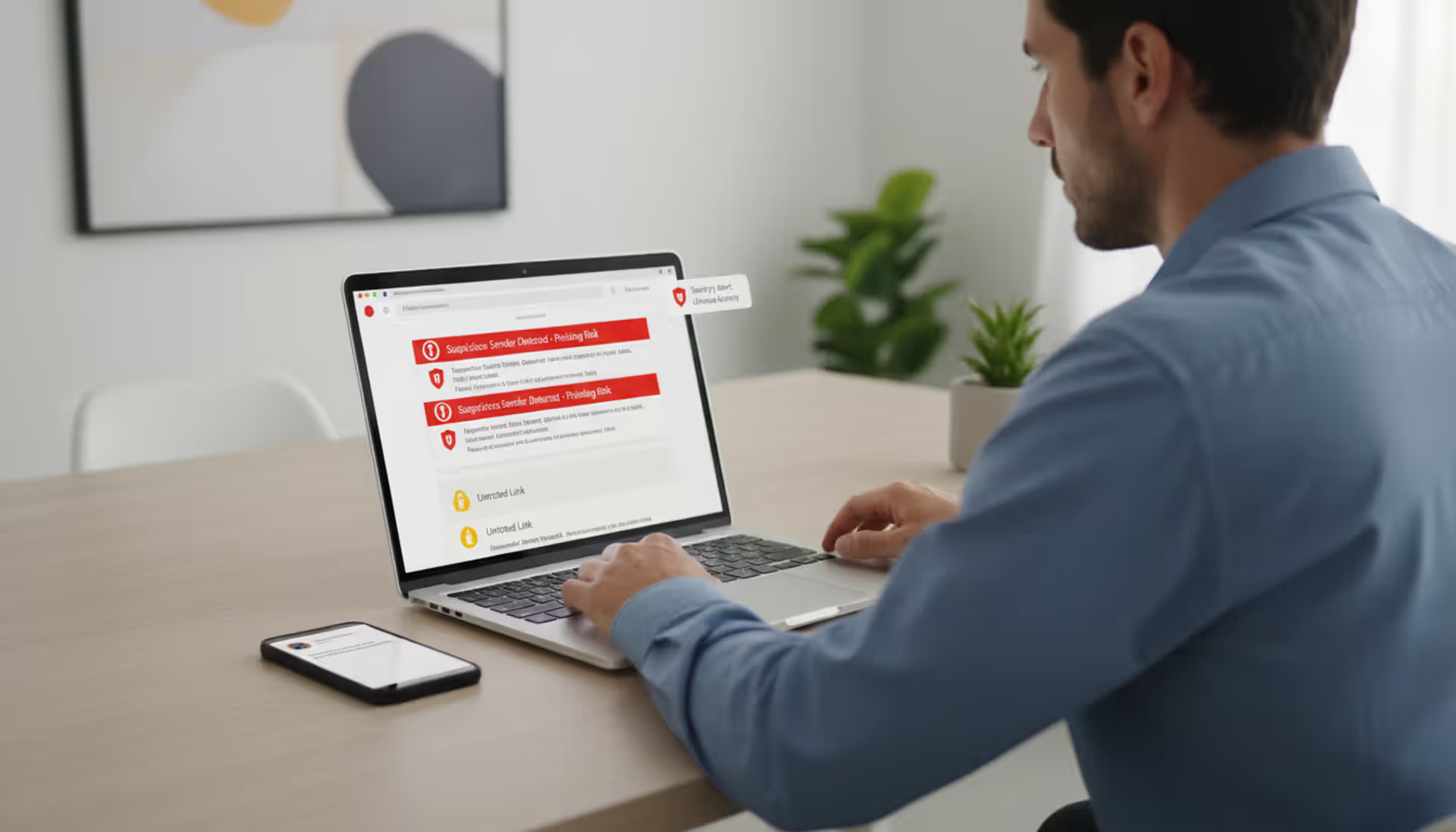
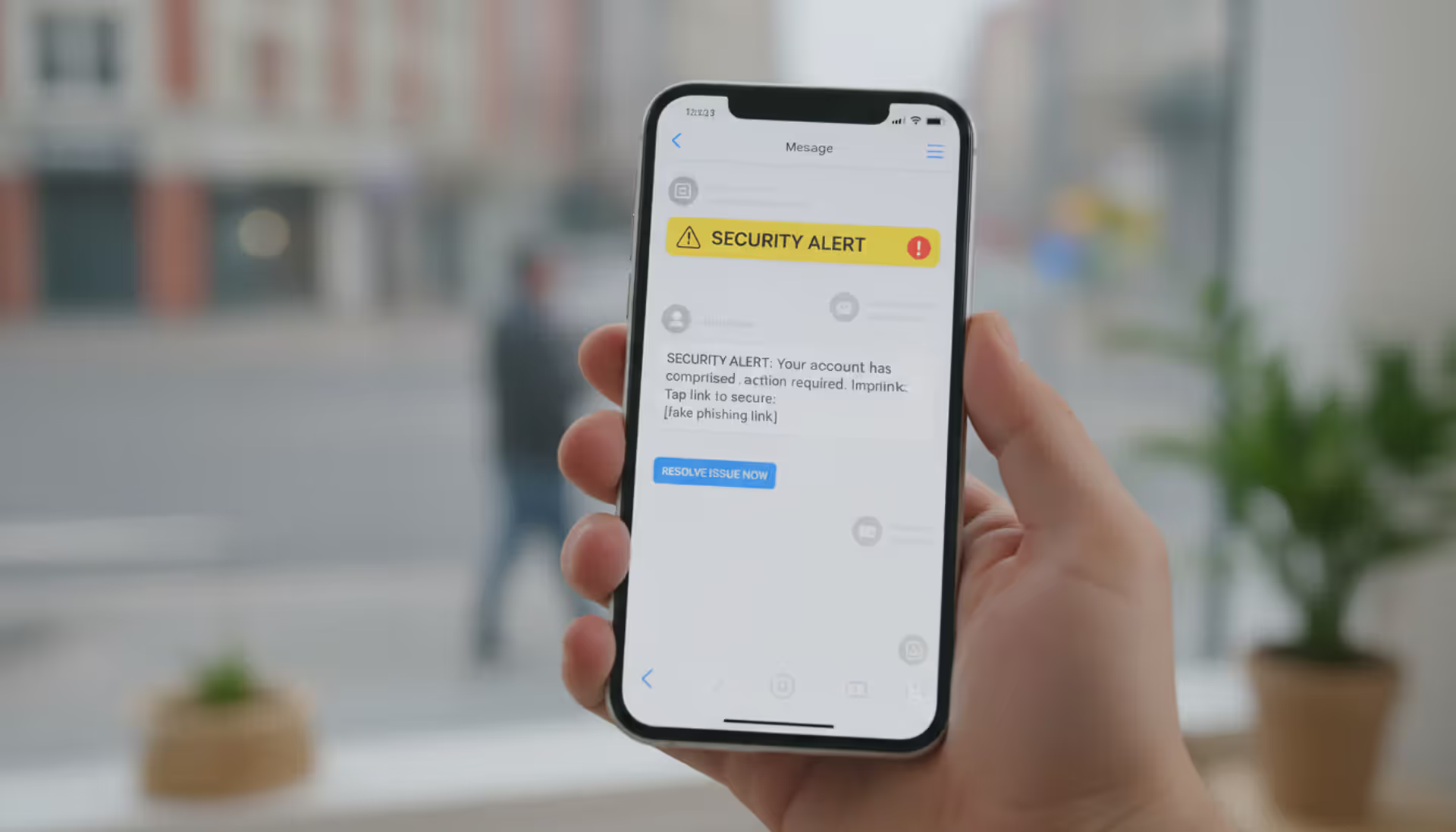
Employee reviewing suspicious emails on laptop and smartphone in office
Phishing Statistics Guide

Content
Content
Last year, scammers stole $12.3 billion through phishing schemes. That's more than Barbados generates in GDP annually. Here's what should worry you more: when researchers test company defenses with fake phishing emails, about 11% of recipients click anyway. And we're talking about employees who've sat through security training.
Even tech companies—places where everyone supposedly knows better—see 7% of their staff give up credentials to well-crafted fakes.
Why do these cons keep working? Attackers figured out something important years ago. You don't need sophisticated malware when you can trick someone into handing over their password. Psychology beats technology every time.
Let's examine what the numbers actually tell us.
Current Phishing Attack Rates and Trends
The Anti-Phishing Working Group counted 5.2 million distinct phishing campaigns in 2025. That's up from 3.88 million the year before—a 34% jump.
Break that down to daily numbers? Around 14,250 new campaigns start every single day.
Your company's email system probably sees about 1,185 phishing attempts monthly. Email filters catch most of them—roughly 3.4 billion got blocked last year across all systems. But 2.1% slip through anyway. Sounds small, right? Except that percentage translates to millions of malicious messages actually landing in inboxes.
Once there, 11.3% of people who see them click. Run those numbers for a 500-person company. You're dealing with approximately 67 dangerous clicks each month, assuming average exposure rates.
What are criminals after? Credentials, mainly. About 68% of current campaigns want your username and password. They're not sending obvious "Nigerian prince" emails anymore. Today's fakes replicate Microsoft 365 login screens so accurately you'd need a magnifying glass to spot differences. Google Workspace portals get copied constantly. So do DocuSign pages and banking sites. These brand impersonation attacks grew 47% between 2024 and 2025.
Timing matters too. Tax season (January through April) sees massive spikes. Criminals know you're expecting financial emails then. Back-to-school shopping in August and September creates another wave. November and December bring package delivery scams as everyone orders gifts online.

Author: Trevor Kingsland;
Source: elegantimagerytv.com
Here's something interesting: most fraudulent websites only stay live for 11 hours. Criminals set them up, harvest credentials, then burn everything down and move on. This rotation keeps them ahead of blacklists.
Mobile devices changed everything. We open 58% of emails on phones now. Attackers optimize fake pages specifically for small screens. You can't hover over links on a phone to check where they really go. That limitation alone makes mobile users 3.2 times likelier to click compared to desktop users.
The only truly secure system is one that is powered off, cast in a block of concrete and sealed in a lead-lined room with armed guards — and even then I have my doubts
— Gene Spafford
Financial Impact of Phishing Attacks
The FBI's Internet Crime Complaint Center logged $12.3 billion in phishing losses for 2025. That's only reported incidents. Many victims never file complaints—they're embarrassed, or they don't realize the full scope of damage. Security analysts estimate actual losses probably sit between $20-30 billion.
Business Email Compromise schemes caused $4.1 billion of documented losses. These attacks work by impersonating executives or vendors. Accounting departments wire money to fraudulent accounts thinking they're following legitimate orders.
Factor in everything—stolen funds, emergency response teams, lawyers, regulatory fines, lost productivity—and mid-sized businesses lose about $1.6 million per successful breach. Large corporations face worse: $14.8 million average losses, especially after reputation damage and customer churn get calculated.
Individual consumers suffer too. Personal phishing victims in 2025 lost an average of $3,200 each. Cryptocurrency scams hit harder, averaging $11,400 per victim. Elderly targets aged 65+ typically lost $5,800—nearly double the general average.
Ransomware that starts with a phished employee costs organizations around $4.9 million per incident. That includes the ransom payment itself (averaging $812,000), downtime costs while systems stay locked, and recovery operations afterward. Roughly 43% of ransomware infections trace back to someone clicking a phishing link.
Cleanup costs pile up fast. Organizations suffering data breaches from phishing spent approximately $4.2 million on aftermath: notifying victims, providing credit monitoring, settling lawsuits, managing crisis communications. Publicly traded companies watched their stock prices drop an average of 7.3% after disclosing major phishing-related breaches.
Author: Trevor Kingsland;
Source: elegantimagerytv.com
Insurance companies noticed these trends. Claims jumped 89% year-over-year. Premiums increased 34% in response. Several insurers now exclude social engineering attacks entirely unless you can prove specific security measures are in place.
Who Gets Targeted by Phishing Attacks
Banks and financial institutions get hammered worst. Their employees face 2,847 phishing attempts annually per person. Healthcare comes second at 2,103 attempts per employee. Medical records sell for more on black markets than credit card numbers do, which explains the targeting.
Different sectors face different levels of risk:
| Industry | Annual Attempts (per employee) | Typical Breach Cost | Success Rate |
| Banking & Finance | 2,847 | $2.1M | 8.7% |
| Healthcare & Medical | 2,103 | $1.9M | 11.2% |
| Educational Institutions | 1,892 | $780K | 14.6% |
| Retail & E-commerce | 1,654 | $1.2M | 10.3% |
| Manufacturing | 1,421 | $1.4M | 9.8% |
| Government Agencies | 1,338 | $890K | 7.4% |
| Technology Companies | 1,287 | $1.6M | 6.9% |
Your job title determines your risk level significantly. CEOs and executives face 5.2 times more targeted attacks than regular staff. Finance department employees who can authorize payments? They see 3.8 times baseline threat volume. HR professionals deal with 2.9 times normal rates because they handle sensitive employee data and regularly communicate with external job applicants.
Company size creates interesting patterns. Small businesses under 100 employees see fewer total attacks but get compromised more often—13.4% fall victim. They can't afford dedicated security teams. Mid-sized companies (100-1,000 employees) occupy dangerous middle ground: valuable enough to attract attention, but lacking enterprise-grade defenses. Large corporations above 1,000 employees absorb massive attack volumes yet maintain lower success rates around 7.1% through layered protections.
Geographically, the United States receives 31% of global phishing attacks. UK takes 9%, Canada 6%, Australia 5%. Success rates run higher in developing economies where cybersecurity awareness programs aren't as widespread.
Age demographics surprise people. Employees aged 18-24 click phishing links 16.8% of the time—highest rate of any age group. Digital natives often feel overconfident about spotting scams. The 45-54 age bracket shows the lowest click rate at 8.2%. Professional experience apparently builds some protective instinct.
Author: Trevor Kingsland;
Source: elegantimagerytv.com
Common Phishing Methods and Success Rates
Criminals use different approaches depending on resources, technical skills, and target characteristics. Each method produces measurably different results.
Email Phishing Statistics
Mass email campaigns—generic messages blasted to millions—achieve 2.9% click rates. These require minimal effort. Send 100,000 emails, get roughly 2,900 clicks, potentially harvest 87 credential sets. The economics work for criminals despite low conversion.
Spear phishing flips this approach. Instead of volume, attackers research specific targets and write personalized messages. They include accurate job titles, reference real projects, mention genuine business relationships gathered from LinkedIn stalking. These customized campaigns get 23.4% click rates.
Whaling goes after the biggest fish—C-suite executives and wealthy individuals. Attackers might spend weeks studying victims: monitoring social media, tracking travel schedules, identifying trusted contacts. Simulation studies found these elaborate operations achieved 38.7% success rates. More than one executive in three fell for meticulously researched scams.
Attachment-based phishing shows declining effectiveness. Malicious Word documents hiding macros or password-protected zip files now get executed only 4.3% of the time, down from 8.1% two years ago. Users grew smarter and sandboxing technology catches more threats.
Link-based phishing dominates currently. Instead of attaching malware directly, criminals embed hyperlinks pointing to counterfeit login pages or exploit kit servers. These get 11.3% click rates on average, though sophistication levels create substantial variation.
SMS and Voice Phishing Data
Text message phishing—"smishing"—exploded with 328% more incidents between 2023 and 2025. Average person now gets approximately 14 smishing texts monthly, though carrier filters block many. Messages that get through achieve 9.7% click rates, slightly below email but still concerning.
Smishing excels at manufacturing urgency. "Package delivery failed—click to reschedule." "Account security alert—verify identity now." "Prize winner notification—claim within 24 hours." People check texts during distracted moments. Plus SMS lacks security indicators you'd see in email clients.
Voice phishing—"vishing"—proves harder to measure but represents growing concern. Criminals use internet calling services to spoof legitimate phone numbers. Your caller ID shows "IRS" or "Bank Fraud Department" even though the caller's in another country entirely. FBI documented vishing complaints increasing 184% from 2023 to 2025.
Age dramatically affects vishing vulnerability. About 31% of elderly victims receiving contact fall for phone scams, compared to just 7% of people under 40. Real-time verbal interaction, authoritative tone, emotional manipulation—these prove powerfully effective against demographics less familiar with such tactics.
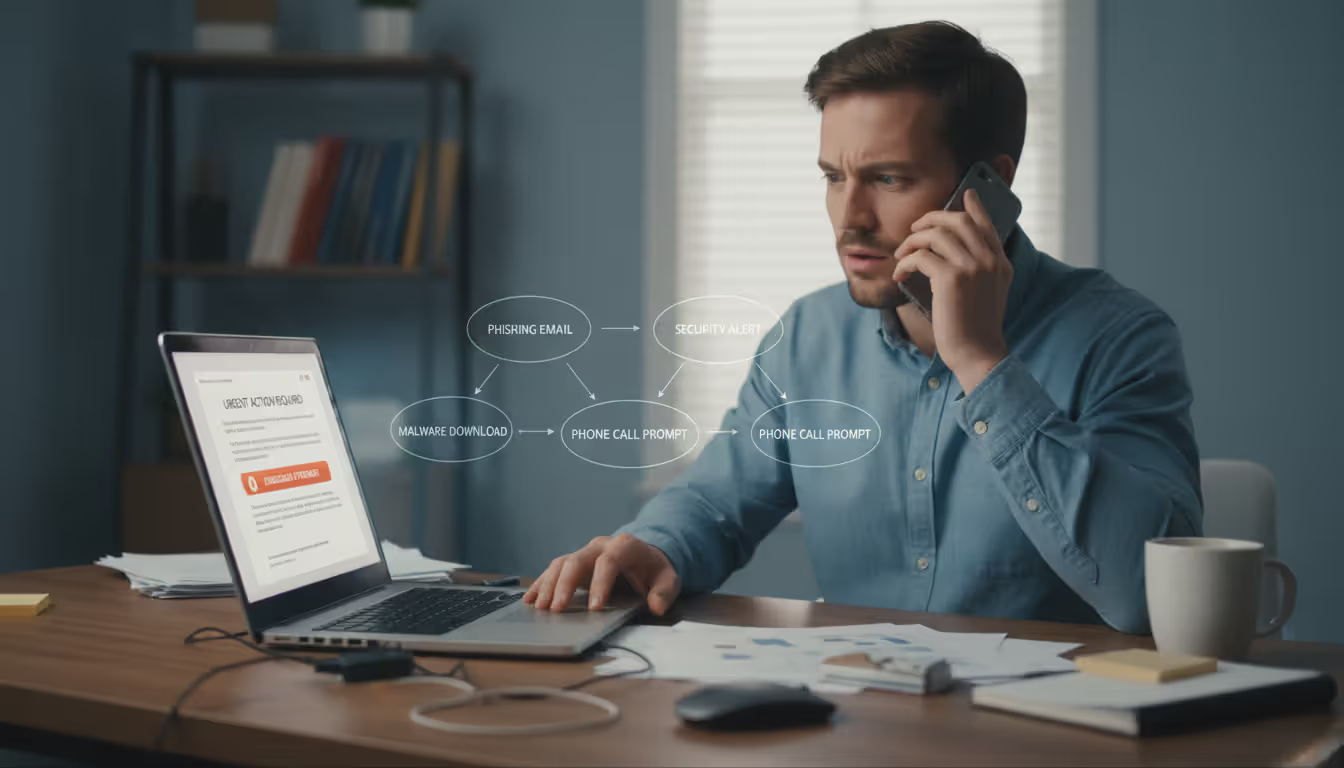
Most dangerous campaigns coordinate multiple channels. Imagine getting an email about suspicious account activity, then immediately receiving a phone call from someone claiming to represent bank security who references that exact email. This multi-channel reinforcement achieves compromise rates exceeding 40% in certain studies because each communication validates the other's seeming legitimacy.
Author: Trevor Kingsland;
Source: elegantimagerytv.com
Warning Signs in Phishing Attempts
Analyzing millions of phishing messages reveals consistent patterns. Attackers adapt constantly, but certain warning signs appear repeatedly.
Sender address problems show up in 87% of phishing emails. Look closely and you'll spot differences—amazan.com instead of amazon.com, or microsoft-security-team.com pretending Microsoft affiliation. Sometimes discrepancies get extremely subtle: lowercase "L" substituting for uppercase "I," or zero replacing letter "O." The complication? About 13% of phishing originates from genuinely compromised legitimate accounts, which makes sender verification tricky.
Urgent or threatening language appears in 73% of phishing messages. "Immediate action required." "Account suspension in 24 hours." "Unauthorized transaction detected—verify immediately." These phrases trigger panic responses that bypass careful thinking. Legitimate companies rarely demand instantaneous responses to unexpected emails.
Generic greetings like "Dear Customer" mark 64% of mass phishing operations. Attackers using spray-and-pray approaches don't have access to actual names. Spear phishing inverts this pattern—targeted campaigns almost always include personalized greetings because criminals invested research effort.
Suspicious hyperlinks hide in 91% of phishing emails. Desktop users can hover their mouse cursor over links without clicking to reveal true destinations. Visible text might show "paypal.com" while actual URL reads "paypa1-secure.ru" or displays a raw IP address. Shortened URLs through bit.ly or tinyurl appear in 23% of phishing emails, deliberately obscuring final destinations.
Grammar and spelling errors, once reliable indicators, now characterize only 34% of phishing emails. AI translation and composition tools let non-native English speakers craft professional-appearing messages. Paradoxically, some criminals deliberately include errors to filter for particularly gullible victims unlikely to scrutinize later fraud stages.
Unusual requests should trigger immediate suspicion. Legitimate organizations never request passwords via email—yet this appears in 41% of credential theft attempts. Gift card purchase requests show up in 18% of Business Email Compromise scams. Cryptocurrency payment demands mark 29% of extortion phishing. Any deviation from established business procedures warrants verification through independent communication channels.
Mismatched branding appears in 56% of phishing emails impersonating specific companies—pixelated logos, wrong color palettes, outdated visual designs. However, attackers increasingly steal official email templates verbatim, reducing visual inspection reliability.
Effectiveness of Phishing Prevention Measures
Different defensive strategies demonstrate measurable differences in protection effectiveness. The data guides where you should allocate resources.
Security awareness training cuts phishing susceptibility by approximately 64% when implemented properly. Organizations conducting quarterly simulated phishing exercises with targeted education see click rates decline from 11.3% to roughly 4.1%. Training effectiveness fades over time without reinforcement—click rates gradually increase absent regular practice.
Most successful training programs share critical traits: monthly simulated tests (not annual), immediate feedback when users click test links, role-specific training addressing particular threats each position faces, and visible executive participation demonstrating organizational commitment. Organizations implementing all four elements achieve click rates below 3%.
Email authentication protocols including SPF, DKIM, and DMARC block approximately 38% of phishing emails when configured correctly. About 67% of Fortune 500 companies had adopted DMARC by 2025, up from 41% in 2023. Implementation quality matters enormously—many organizations deploy these protocols in monitoring mode rather than enforcement, severely limiting protective value.
Advanced email filtering employing machine learning reduces phishing delivery by 78-84% compared to traditional signature-based filters. These systems analyze sender reputation, content patterns, link destinations, behavioral anomalies. They generate false positives at rates between 0.3-1.2%, requiring careful tuning to avoid blocking legitimate communications.
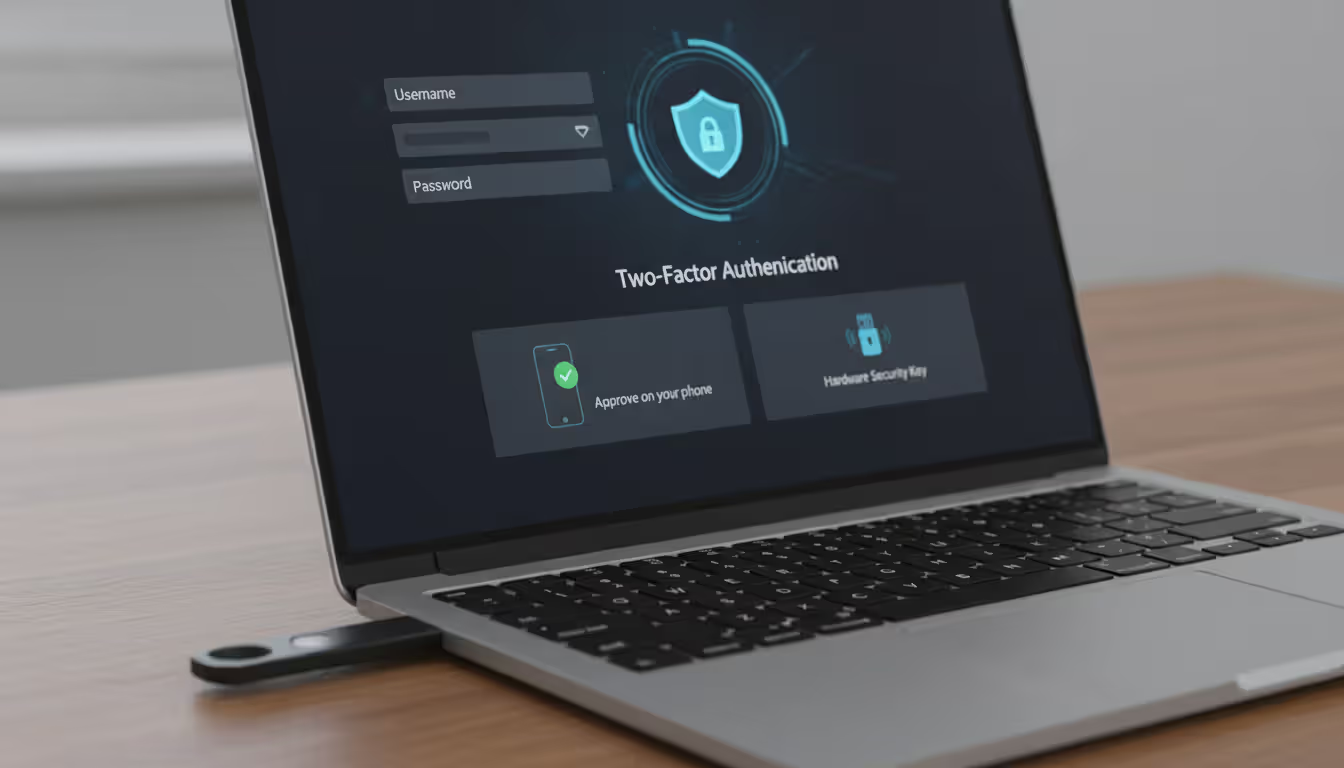
Multi-factor authentication prevents account compromise in 99.2% of cases where phishing successfully captures credentials. Attackers can't access accounts lacking the second authentication factor regardless of password theft. This explains why criminals increasingly pursue MFA-bypass techniques including SIM swapping or adversary-in-the-middle attacks.
Author: Trevor Kingsland;
Source: elegantimagerytv.com
Phishing-resistant MFA implementations—FIDO2 security keys, biometric authentication—provide superior protection with zero successful bypasses reported in production environments. Adoption remains limited at only 14% of organizations due to cost, implementation complexity, and user experience concerns.
Email banner warnings alerting users about external senders reduce click rates by roughly 23%. These visual indicators—"This email originated outside your organization"—prompt recipients to scrutinize messages more carefully. Banner blindness can develop as users grow accustomed to constant warnings.
User-reported phishing attempts increased 156% from 2023 to 2025, indicating growing awareness and willingness to flag suspicious messages. Organizations with streamlined reporting mechanisms like browser plugins or dedicated email addresses receive 4.2 times more reports than those requiring complex submission processes. Each reported phishing email potentially protects dozens of additional would-be victims.
Browser isolation technology renders web content in sandboxed environments, blocking 94% of phishing-delivered malware. Users can click malicious links without code executing on their actual computers. This defense can't stop credential theft when users voluntarily enter passwords on counterfeit login pages.
Frequently Asked Questions About Phishing Statistics
The numbers paint an uncomfortable picture. Attacks jumped 34% year-over-year. Criminals extracted over $12 billion from victims. Success rates persist at disturbingly high levels despite growing awareness. Phishing shows no signs of slowing down.
But the data also reveals what actually works. Proper security awareness training cuts click rates by 64%. Technical controls like email authentication, advanced filtering, and multi-factor authentication create essential protective layers. Organizations achieving lowest compromise rates combine both approaches: educated employees supported by robust technical infrastructure.
Your personal vigilance matters significantly. Understanding that 11.3% of recipients click phishing links means you can't assume immunity based on technical knowledge. Technology companies themselves experience 6.9% success rates among their employees. Healthy skepticism provides real protection. Verify unexpected requests through independent channels. Report suspicious messages promptly to security teams.
Financial stakes justify serious prevention investment. When average successful attacks cost mid-sized companies $1.6 million and enterprises $14.8 million, allocating budget toward training, tools, and personnel becomes essential rather than optional. Your organization will face phishing attacks—the statistics guarantee it. Whether you successfully defend against them depends on preparation and implementation of evidence-based countermeasures.
Related Stories
Read more
Read more

The content on this website is provided for general informational and educational purposes only. It is intended to explain concepts related to cybersecurity awareness, online threats, phishing attacks, and data protection practices.
All information on this website, including articles, guides, and examples, is presented for general educational purposes. Cybersecurity risks and protection strategies may vary depending on individual behavior, technology usage, and threat environments.
This website does not provide professional cybersecurity, legal, or technical advice, and the information presented should not be used as a substitute for consultation with qualified cybersecurity professionals.
The website and its authors are not responsible for any errors or omissions, or for any outcomes resulting from decisions made based on the information provided on this website.